Blog

7settNaxosLegge Festival – 8th edition
festival delle narrazioni, della lettura e del libro


Book-signing of “Irredimibile Sicilia?” by Fabrizio Fonte

Parco Archeologico di Naxos, via Lungomare Schisò – Giardini Naxos @ 6.00pm


Info:
Parco Archeologico NaxosTaormina
parconaxostaormina.com
FB: Parco archeologico Naxos Taormina
(+39) 0942628738 – 094251001

C A N C E L L E D

Il Barbiere di Siviglia / The Barber of Seville

by Gioacchino Rossini

Ancient Theatre, September 6th and 7th 2018 @ 9.30pm

The Barber of Seville, or The Useless Precaution (Italian: Il barbiere di Siviglia, ossia L’inutile precauzione is an opera buffa in two acts by Gioachino Rossini with an Italian libretto by Cesare Sterbini. Rossini’s Barber has proven to be one of the greatest masterpieces of comedy within music, and has been described as the opera buffa of all “opere buffe”. After two hundred years, it remains a popular work.


More info on staging and cast as soon as available

Two dates

Thursday 6 September >> tickets on boxol.it

Friday 7 September >> tickets on boxol.it

Stalls (Parterre): € 70,00
Gallery: € 50,00
Upper circle (numbered seats): € 45,00
Upper circle (non-numbered seats): € 23,00

SYNOPSIS

Place: Seville, Spain
Time: 18th century


Act 1 The square in front of Bartolo’s house

In a public square outside Bartolo’s house a band of musicians and a poor student named Lindoro are serenading, to no avail, the window of Rosina (“Ecco, ridente in cielo”; “There, laughing in the sky”). Lindoro, who is really the young Count Almaviva in disguise, hopes to make the beautiful Rosina love him for himself – not his money. Almaviva pays off the musicians who then depart, leaving him to brood alone. Rosina is the young ward of the grumpy, elderly Bartolo and she is allowed very little freedom because Bartolo plans to marry her once she is of age and thus appropriate her not inconsiderable dowry.
Figaro approaches singing (Aria: “Largo al factotum della città”; “Make way for the factotum of the city”). Since Figaro used to be a servant of the Count, the Count asks him for assistance in helping him meet Rosina, offering him money should he be successful in arranging this. (Duet: “All’idea di quel metallo”; “At the idea of that metal”). Figaro advises the Count to disguise himself as a drunken soldier, ordered to be billeted with Bartolo, so as to gain entrance to the house. For this suggestion, Figaro is richly rewarded.
“Una voce poco fa” MENU0:00 Aurelia Dobrovolskaya (lyric coloratura soprano), 1914 Problems playing this file? See media help. A room in Bartolo’s house with four doors
The scene begins with Rosina’s cavatina, “Una voce poco fa” (“A voice a little while ago”). (This aria was originally written in the key of E major, but it is sometimes transposed a semitone up into F major for coloratura sopranos to perform, giving them the chance to sing extra, almost traditional, cadenzas, sometimes reaching high Ds or even Fs.)
“La calunnia è un venticello” MENU0:00 Feodor Chaliapin Problems playing this file? See media help. Knowing the Count only as Lindoro, Rosina writes to him. As she is leaving the room, Bartolo and Basilio enter. Bartolo is suspicious of the Count, and Basilio advises that he be put out of the way by creating false rumours about him (this aria, “La calunnia è un venticello” – “Calumny is a little breeze” – is almost always sung a tone lower than the original D major).
When the two have gone, Rosina and Figaro enter. Figaro asks Rosina to write a few encouraging words to Lindoro, which she has actually already written. (Duet: “Dunque io son…tu non m’inganni?”; “Then I’m the one…you’re not fooling me?”). Although surprised by Bartolo, Rosina manages to fool him, but he remains suspicious. (Aria: “A un dottor della mia sorte”; “To a doctor of my class”).
Count Almaviva, disguised as a soldier and pretending to be drunk, enters the house and demands to be quartered there. In fear of the drunken man, Berta the housekeeper rushes to Bartolo for protection. Bartolo tells the “soldier” that he (Bartolo) has an official exemption which excuses him from the requirement to quarter soldiers in his home. Almaviva pretends to be too drunk and belligerent to understand, and dares Bartolo to brawl. While Bartolo searches his cluttered desk for the official document which would prove his exemption, Almaviva whispers to Rosina that he is Lindoro in disguise, and passes a love-letter to her. Bartolo suspiciously demands to know what is in the piece of paper in Rosina’s hands, but she fools him by handing over her laundry list. Bartolo and the Count argue loudly. Basilio enters; then Figaro, who warns that the noise of the argument is rousing the whole neighborhood. Finally, the noise attracts the attention of the Officer of the Watch and his troops, who crowd into the room. Bartolo demands that the Officer arrest the “drunken soldier”. The Officer starts to do so, but Almaviva quietly reveals his true identity to the Officer, and he (the Officer) backs off and stands down. Bartolo and Basilio are astonished and mystified; Figaro laughs quietly at them. (Finale: “Fredda ed immobile, come una statua”; “Cold and still, just like a statue”). The confusion intensifies and causes everyone to suffer headaches and auditory hallucinations (“Mi par d’esser con la testa in un’orrida fucina; dell’incudini sonore l’importuno strepitar.”; “My head seems to be in a fiery forge: the sound of the anvils deafens the ear.”)


Act 2 A room in Bartolo’s house with a piano

Almaviva again appears at the doctor’s house, this time disguised as a priest who is also a singing tutor and pretending to act as substitute for the supposedly ailing Basilio, Rosina’s regular singing teacher. Initially, Bartolo is suspicious, but does allow Almaviva to enter when the Count gives him Rosina’s letter. He describes his plan to discredit Lindoro whom he believes to be one of the Count’s servants, intent on pursuing women for his master. While Almaviva pretends to give Rosina her singing lesson, Figaro arrives to shave Bartolo. Bartolo demurs, but Figaro makes such a scene he agrees, but in order not to leave the supposed music master alone with Rosina, the doctor has Figaro shave him right there in the music room. When Basilio suddenly appears, he is bribed by a full purse from Almaviva and persuaded to leave again, with much discussion of how ill he looks. (Quintet: “Don Basilio! – Cosa veggo!”; “Don Basilio! – What do I see?”). Figaro begins to shave Bartolo, but Bartolo overhears the lovers conspiring, and angrily drives everybody away.
The scene returns to the location of act 1 with a grill looking out onto the square. Bartolo orders Basilio to have the notary ready to marry him to Rosina that evening. He also explains his plot to come between the lovers. Basilio leaves and Rosina arrives. Bartolo shows Rosina the letter she wrote to “Lindoro”, and persuades her that this is evidence that Lindoro is merely a flunky of Almaviva and is toying with her at Almaviva’s behest. Rosina believes him and agrees to marry him.
During an instrumental interlude, the music creates a thunder storm to indicate the passage of time. The Count and Figaro climb up a ladder to the balcony and enter the room through a window. Rosina shows Almaviva the letter and accuses him of betraying her. Almaviva reveals his identity and the two reconcile. While Almaviva and Rosina are enraptured by one another, Figaro keeps urging them to leave. Two people are heard approaching the front door, who later turn out to be Basilio and the notary. However, when the Count, Rosina, and Figaro attempt to leave by way of the ladder, they discover it has been removed. The marriage contract requires two witnesses; Figaro is one, but another is needed. The Count makes Basilio an offer he can’t refuse: the choice of accepting a bribe and being a witness to his marriage or receiving two bullets in the head (an easy choice, Basilio says). He and Figaro witness the signatures to a marriage contract between the Count and Rosina. Bartolo barges in, accompanied by the Officer and the men of the watch, but too late; the marriage is already complete. The befuddled Bartolo (who was the one who had removed the ladder) is pacified by being allowed to retain Rosina’s dowry. The opera concludes with an anthem to love (“Amor e fede eterna, si vegga in noi regnar!”).

Brit-Floyd-bannerBrit Floyd

Eclipse World Tour 2018 – ’45 Years of The Dark Side of the Moon’

Ancient Theatre, September 8th 2018 @ 9.30pm
Brit Floyd, the world’s greatest Pink Floyd tribute show returns to the stage in 2018 for a very special ’45th Anniversary’ retrospective of Pink Floyd’s iconic 1973 album, The Dark Side of the Moon. The Brit Floyd show has truly become a phenomenon, widely regarded as the world’s greatest live tribute to Pink Floyd. Faithfully recreating the scale and pomp of the final 1994 Division Bell tour, complete with a stunning million dollar light show, large circle screen and arch plus moving lights, lasers, inflatables and theatrics. A Brit Floyd show really is as close as fans will get to experiencing the magnificence of a Pink Floyd show live.

TICKETS on boxol.it
Stalls (Parterre): € 60,00
Gallery: € 50,00
Upper circle (numbered seats): € 45,00
Upper circle (non-numbered seats): € 35,00

THE BAND

Brit Floyd is a Pink Floyd tribute band formed in 2011 in Liverpool, United Kingdom. Their live shows attempt to emulate and recreate the sound and soundscape of Pink Floyd’s live shows. Damian Darlington formed the band after playing with The Australian Pink Floyd Show for 17 years. Brit Floyd originated on the initiative of musical director, guitarist, and singer Damian Darlington “simply because he felt he could do it one better” than his previous band, The Australian Pink Floyd Show, and stating that “there is much more attention to details in every aspect of the show, from the music to the visuals to the lighting: everything is that much more perfected and there’s a passion coming off that stage… It’s a coherent, emotional journey through Pink Floyd’s catalog.”

Darlington began following Pink Floyd’s work after hearing The Wall at the age of 13 and he saw the band live for the first time in 1987 during the A Momentary Lapse of Reason Tour. “Since then, he has seen the band in different incarnations, after its split, and including its 2005 reunion.

Band members
Various musicians have played in Brit Floyd since its inception in 2011. The present band members are listed here:

Damian Darlington – Musical Director, guitar, lap steel, vocals (2011–present)
Gareth Darlington – Sound Designer and Front of House Engineer (2011–present)
Bryan Kolupski – Media Director – Animation and Video (2011–present)
Rob Stringer – keyboards, vocals (2011–present)
Ian Cattell – bass guitar, vocals (2011–present)
Arran Ahmun – drums (2011–present)
Ola Bienkowska – backing vocals (2011–present)
Emily Jollands – backing vocals (2011–present)
Jacquie Williams – backing vocals (2011–present)
Angela Cervantes – backing vocals (2013-present)
Thomas Ashbrook – keyboards, vocals (2013-present)
Roberta Freeman – backing vocals (2014-present)
Karl Penny – drums (2014-present)
Jay Davidson – saxophones, guitars, percussions, keyboard (2015-present)
Edo Scordo – guitars, vocals (2015-present)
Jenn Kee – backing vocals (2016-present)
Ryan Saranich – saxophones, guitars, percussions, keyboard (2016-present)

(source: wikipedia)

www.britfloyd.com

Where to stay

Hotel Villa Carlotta Hotel Villa Ducale Hotel Villa Schuler Hotel La Pensione Svizzera

recommended by Taormina.it

LocandinaA4-1Art, Culture, exhibitions, events

Gardens of Palazzo Corvaja

Open everyday

Free entrance


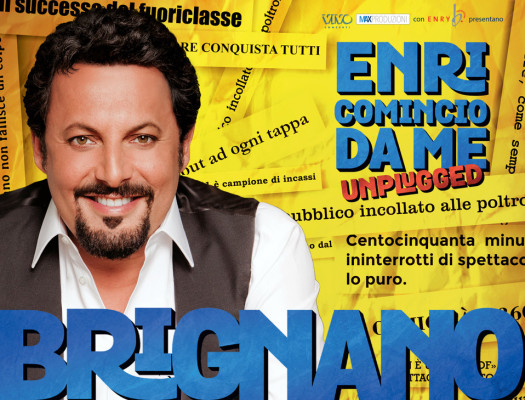
EnricoBrignano-tour-estivo-2018Enrico Brignano

in EnriComincioda me Tour

Ancient Theatre, Saturday 1 September 2018 @ 9.30pm

Enrico Brignano (born 1966) is an Italian actor, playwright, comedian, presenter and writer.
Born in Rome, Brignano graduated in 1990 at the Laboratory of Performing Exercises under Gigi Proietti, who later chose him for several of his play between 1994 and 1997 and as a sidekick in the TV-series Il maresciallo Rocca. After appearing as a comedian in several variety shows, he had his breakout with the role of Giacinto in Un medico in famiglia. Mainly active on stage, he played a number of main roles in TV-series and films, and in 2000 he directed, wrote and starred in the romantic comedy “Si fa presto a dire amore”.


TICKETS on ticketone.it
Stalls (Parterre): € 69,00
Gallery: € 57,50
Upper circle (numbered seats): € 46,00
Upper circle (non-numbered seats): € 34,50


International Music Festival 2018Taormina International Music Festival 2018

San Giorgio Theatre (Via Don Bosco) – Every Saturday of September and October 2018 @ 9.15pm

Entrance: € 20,00, drink included

Season ticket (9 evenings): € 100,00


Info and booking: 0039 340 64 26 230 (mobile)

Box office: every day from 11:00 – 1:00 pm and (on concert date) from 7.00pm to 9.00pm

Online booking: www.italianoperataormina.com or classictic.com


September 1 – Gran Galà dell’Opera

Elisabetta Zizzo​, sopran – Angelo Villari, tenor – Graziano D’Urso​, baritone – M° Antonio Gennaro, piano

September 8 – Taste of Poland
Henryk Blazej, flute – Teresa Kaban, piano

September 15 – Les Bouffes Napolitains
Ilaria Iaquinta, sopran – Giacomo Serra, piano

September 22 – Bravi, Bene… Bis!
Roberto Metro, piano – Elvira Foti, piano
Musics of Brahms, Strauss, Bizet, Rossellini,…

September 29 – Sogno D’Or
Elena Bakanova, sopran – Raffaele Mascolo, piano
Musics of Verdi, Leoncavallo, Puccini, Tosti,…

October 6 – Romanticismo in musica
Veronica Cardullo, soprano – Pierre-Laurant Boucharlat, piano
Musics of Verdi, Puccini, Debussy

October 13 – Love Duets
Carmen Salamone, sopran – Davide Benigno, tenor – Antonio Gennaro, piano
Musics of Puccini, Verdi, Donizetti

October 20 – Donne all’Opera
Mariagrazia Tringali, sopran – Giovanna Savino, flute – Cinzia Bartoli, piano
Musics of Bellini, Rossini, Donizetti

October 27 – Una Notte all’Opera
Elisabetta Zizzo, sopran – Marco Ciampi, piano
Musics of Puccini, Verdi, Mozart,…

Exhib. “Arcadio/Terre in Moto”

by Giuseppe Agnello

Archaelogical sites of the Archaelogical Park of Taormina-Naxos (Lungomare Schisò, Giardini Naxos) from August 28 to December 9 2018


Opening hours: everyday.
August 28/31 > 9.00am – 7.00pm
September 1/15 > 9,00am-6.30pm
September 16/30 > 9,00am-,6.00pm
October 1/15 > 9,00am-5,30pm
October 16/31 >  9,00am-5,00 pm1/4 novembre 9,00-16,00

Tickets: € 4,00 – EU citizens: between 18 and 25 years old: € 2,00 – Under 18 and Italian teachers: free


giuseppe agnello

More info
FB page: Parco archeologico Naxos Taormina

mythos

La Traviata

by Giuseppe Verdi

Mythos Opera Festival

Ancient Theatre, Tuesday 28th August 2018 @ 9.30pm


La Traviata (The Fallen Woman) is an opera in three acts by Giuseppe Verdi set to an Italian libretto by Francesco Maria Piave. It is based on La Dame aux Camélias (1852), a play adapted from the novel by Alexandre Dumas, fils.
It is considered the most famous opera of Verdi
The Philarmonink Orchestra of Calabria will be directed by Filippo Arlia.

TICKETS on boxol.it and ticketone.it
Stalls and Gallery: € 85,00
Upper circle (numbered seats): € 60,00
Upper circle (non-numbered seats): € 35,00

More info
GB page of Mythos Opera Festival – Catania e Taormina


SYNOPSIS

Synopsis Place: Paris and its vicinity. Time: Beginning of the 19th century


Act 1 The salon in Violetta’s house

Scene 1: Party (attrib. Carl d’Unker) Violetta Valéry, a famed courtesan, throws a lavish party at her Paris salon to celebrate her recovery from an illness. Gastone, a viscount, has brought with him a friend, Alfredo Germont, a young bourgeois from a provincial family who has long adored Violetta from afar. While walking to the salon, Gastone tells Violetta that Alfredo loves her, and that while she was ill, he came to her house every day. Alfredo joins them, admitting the truth of Gastone’s remarks.
Baron Douphol, Violetta’s current lover, waits nearby to escort her to the salon; once there, the Baron is asked to give a toast, but refuses, and the crowd turns to Alfredo, who agrees to sing a brindisi – a drinking song (Alfredo, Violetta, chorus: Libiamo ne’ lieti calici – “Drink from the joyful cup”).
From the next room, the sound of the orchestra is heard and the guests move there to dance. After a series of severe coughs and almost fainting, Violetta begins to feel dizzy and asks her guests to go ahead and to leave her to rest until she recovers. While the guests dance in the next room, Violetta looks at her pale face in her mirror. Alfredo enters and expresses his concern for her fragile health, later declaring his love for her (Alfredo, Violetta: Un dì, felice, eterea – “One day, happy and ethereal”). At first, she rejects him because his love means nothing to her, but there is something about Alfredo that touches her heart. He is about to leave when she gives him a flower, telling him to return it when it has wilted, which will be the very next day.
“È strano! … Ah, fors’è lui” MENU0:00 Act 1 finale, sung by Lucrezia Bori in 1910 for Edison Records Problems playing this file? See media help. After the guests leave, Violetta wonders if Alfredo could actually be the one in her life (Violetta: È strano! … Ah, fors’è lui – “Ah, perhaps he is the one”). But she concludes that she needs freedom to live her life (Violetta, Alfredo: Sempre libera – “Always free”). From off stage, Alfredo’s voice is heard singing about love as he walks down the street.

Act 2
Scene 1: Violetta’s country house outside Paris

Three months later, Alfredo and Violetta are living together in a peaceful country house outside Paris. Violetta has fallen in love with Alfredo and she has completely abandoned her former life. Alfredo sings of their happy life together (Alfredo: De’ miei bollenti spiriti / Il giovanile ardore – “The youthful ardor of my ebullient spirits”). Annina, the maid, arrives from Paris, and, when questioned by Alfredo, tells him that she went there to sell the horses, carriages and everything owned by Violetta to support their country lifestyle.
Alfredo is shocked to learn this and leaves for Paris immediately to settle matters himself. Violetta returns home and receives an invitation from her friend, Flora, to a party in Paris that evening. Alfredo’s father, Giorgio Germont, is announced and demands that she break off her relationship with his son for the sake of his family, since he reveals that Violetta’s relationship with Alfredo has threatened his daughter’s engagement (Giorgio: Pura siccome un angelo, Iddio mi diè una figlia – “Pure as an angel, God gave me a daughter”) because of Violetta’s reputation. Meanwhile, he reluctantly becomes impressed by Violetta’s nobility, something which he did not expect from a courtesan. She responds that she cannot end the relationship because she loves him so much, but Giorgio pleads with her for the sake of his family. With growing remorse, she finally agrees (Violetta, Giorgio: Dite alla giovine, sì bella e pura, – “Tell the young girl, so beautiful and pure,”) and says goodbye to Giorgio. In a gesture of gratitude for her kindness and sacrifice, Giorgio kisses her forehead before leaving her weeping alone.
Violetta gives a note to Annina to send to Flora accepting the party invitation and, as she is writing a farewell letter to Alfredo, he enters. She can barely control her sadness and tears; she tells him repeatedly of her unconditional love (Violetta: Amami, Alfredo, amami quant’io t’amo – “Love me, Alfredo, love me as I love you”). Before rushing out and setting off for Paris, she hands the farewell letter to her servant to give to Alfredo.
Soon, the servant brings the letter to Alfredo and, as soon as he has read it, Giorgio returns and attempts to comfort his son, reminding him of his family in Provence (Giorgio: Di Provenza il mar, il suol chi dal cor ti cancellò? – “Who erased the sea, the land of Provence from your heart?”). Alfredo suspects that the Baron is behind his separation with Violetta, and the party invitation, which he finds on the desk, strengthens his suspicions. He decides to confront Violetta at the party. Giorgio tries to stop Alfredo, but he rushes out.

Scene 2: Party at Flora’s house

Act 2, scene 2 from Fife Opera’s 2004 production At the party, the Marquis tells Flora that Violetta and Alfredo have separated, much to the amazement of everyone who had previously seen the happy couple. She calls for the entertainers to perform for the guests (Chorus: Noi siamo zingarelle venute da lontano – “We are gypsy girls who have come from afar”; Di Madride noi siam mattadori – “We are matadors from Madrid”). Gastone and his friends join the matadors and sing (Gastone, chorus, dancers: È Piquillo un bel gagliardo Biscaglino mattador – “Piquillo is a bold and handsome matador from Biscay”).
Violetta arrives with Baron Douphol. They see Alfredo at the gambling table. When he sees them, Alfredo loudly proclaims that he will take Violetta home with him. Feeling annoyed, the Baron goes to the gambling table and joins him in a game. As they bet, Alfredo wins some large sums until Flora announces that supper is ready. Alfredo leaves with handfuls of money.
As everyone is leaving the room, Violetta has asked Alfredo to see her. Fearing that the Baron’s anger will lead him to challenge Alfredo to a duel, she gently asks Alfredo to leave. Alfredo misunderstands her apprehension and demands that she admit that she loves the Baron. In grief, she makes that admission and, furiously, Alfredo calls the guests to witness what he has to say (Questa donna conoscete? – “You know this woman?”). He humiliates and denounces Violetta in front of the guests and then throws his winnings at her feet in payment for her services. She faints onto the floor. The guests reprimand Alfredo: Di donne ignobile insultatore, di qua allontanati, ne desti orror! (“Ignoble insulter of women, go away from here, you fill us with horror!”).
In search of his son, Giorgio enters the hall and, knowing the real significance of the scene, denounces his son’s behavior (Giorgio, Alfredo, Violetta, chorus: Di sprezzo degno sè stesso rende chi pur nell’ira la donna offende. – “A man, who even in anger, offends a woman renders himself deserving of contempt.”).
Flora and the ladies attempt to persuade Violetta to leave the dining room, but Violetta turns to Alfredo: Alfredo, Alfredo, di questo core non puoi comprendere tutto l’amore… – “Alfredo, Alfredo, you can’t understand all the love in this heart…”.

Act 3 Violetta’s bedroom

Cover of a circa 1855 vocal score with an engraving by Leopoldo Ratti Dr. Grenvil tells Annina that Violetta will not live long since her tuberculosis has worsened. Alone in her room, Violetta reads a letter from Alfredo’s father telling her that the Baron was only wounded in his duel with Alfredo; that he has informed Alfredo of the sacrifice she has made for him and his sister; and that he is sending his son to see her as quickly as possible to ask for her forgiveness. But Violetta senses it is too late (Violetta: Addio, del passato bei sogni ridenti – “Farewell, lovely, happy dreams of the past”).
Annina rushes in the room to tell Violetta of Alfredo’s arrival. The lovers are reunited and Alfredo suggests that they leave Paris (Alfredo, Violetta: Parigi, o cara, noi lasceremo – “We will leave Paris, O beloved”).
But it is too late: she knows her time is up (Alfredo, Violetta: Gran Dio!…morir sì giovane – “Great God!…to die so young”). Alfredo’s father enters with the doctor, regretting what he has done. After singing a duet with Alfredo, Violetta suddenly revives, exclaiming that the pain and discomfort have left her. A moment later, she dies in Alfredo’s arms.

alchemaya-e-gazzè-1024x434MAX GAZZE’

“Alchemaya: Opera Sinfonica” Tour

Ancient Theatre, Saturday August 25th @ 9.00pm


TICKETS on boxol.it and ticketone.it
Stalls (Parterre): € 69,00
Gallery: € 57,50
Upper circle (numbered seats): € 46,00
Upper circle (non-numbered seats): € 34,50

Italian pop singer/songwriter and producer Max Gazzè was born in Rome and raised in Brussels, where the talented performer began studying music, taking electric bass classes at the age of 14. Soon, Gazzè was joining different bands, playing soul, funk, progressive rock, and ska. After participating in an English group called 4 Play 4, he returned to Rome in 1991, forming a rhythm & blues act called Emporium, composing the soundtrack for local short films, and recording his first solo album, Contro un’Onda del Mare (Against a Wave of the Sea), in 1994, issued by Virgin Records in November 1995. Already starting to gain a following, thanks to opening for the famed Franco Battiato before his debut was even released, Gazzè got to work on his next album between touring and performances at the San Remo Festival. La Favola di Adamo ed Eva came out in 1998, followed by the self-titled third effort two years later. However, signs of label problems were already apparent, and by 2003 Gazzè had left Virgin for EMI, and by the next year his first album with them, Un Giorno, had come out.
(Sorce: www.allmusic.com)

Aida_Aida

by Giuseppe Verdi

Mythos Opera Festival

Ancient Theatre, Friday 24th August 2018


On the tenth anniversary of his death, The Mythos Opera Festival will homage the great Sicilian tenor Giuseppe Di Stefano through the greatest opera of Giuseppe Verdi.


TICKETS on boxol.it and ticketone.it
Stalls and Gallery: € 85,00
Upper circle (numbered seats): € 60,00
Upper circle (non-numbered seats): € 35,00


Synopsis
Antecedent: The Egyptians have captured and enslaved Aida, a Nubian princess. An Egyptian military commander, Radamès, struggles to choose between his love for her and his loyalty to the Pharaoh. To complicate the story further, the Pharaoh’s daughter Amneris is in love with Radamès, although he does not return her feelings.


Act 1

Scene 1: A hall in the King’s palace; through the rear gate the pyramids and temples of Memphis are visible

Ramfis, the high priest of Egypt, tells Radamès, the young warrior, that war with the Nubians seems inevitable, and Radamès hopes that he will be chosen as the Egyptian commander (Ramfis, Radamès : Sì, corre voce l’Etiope ardisca / “Yes, it is rumored that Ethiopia dares once again to threaten our power”).
Radamès dreams both of gaining victory on the battlefield and of Aida, the Nubian slave, with whom he is secretly in love (Radamès: Se quel guerrier io fossi! … Celeste Aida / “Heavenly Aida”). Aida, who is also secretly in love with Radamès, is the captured daughter of the Nubian King Amonasro, but her Egyptian captors are unaware of her true identity. Her father has invaded Egypt to deliver her from servitude.
Amneris, the daughter of the Egyptian King, enters the hall. She too loves Radamès, but fears that his heart belongs to someone else (Radamès, Amneris: Quale insolita gioia nel tuo sguardo / “In your looks I trace a joy unwonted”).
Aida appears and, when Radamès sees her, Amneris notices that he looks disturbed. She suspects that Aida could be her rival, but is able to hide her jealousy and approach Aida (Amneris, Aida, Radamès: Vieni, o diletta, appressati / “Come, O delight, come closer”).
Set design by Philippe Chaperon for Act 1, Scene 2 at the Cairo première. The King enters, along with the High Priest, Ramfis, and the whole palace court. A messenger announces that the Nubians, led by King Amonasro, are marching towards Thebes. The King declares war and proclaims that Radamès is the man chosen by the goddess Isis to be the leader of the army (The King, Messenger, Radamès, Aida, Amneris, chorus: Alta cagion v’aduna / “Oh fate o’er Egypt looming”). Upon receiving this mandate from the King, Radamès proceeds to the temple of Vulcan to take up the sacred arms (The King, Radamès, Aida, Amneris, chorus: Su! del Nilo al sacro lido / “On! Of Nilus’ sacred river, guard the shores”).
Alone in the hall, Aida feels torn between her love for her father, her country, and Radamès (Aida: Ritorna vincitor / “Return a conqueror”).

Scene 2: Inside the Temple of Vulcan

Solemn ceremonies and dances by the priestesses take place (High Priestess, chorus, Radamès: Possente Ftha … Tu che dal nulla / “O mighty Ptah”). This is followed by the installation of Radamès to the office of commander-in-chief (High Priestess, chorus, Radamès: Immenso Ftha .. Mortal, diletto ai Numi / “O mighty one, guard and protect!”). All present in the temple pray for the victory of Egypt and protection for their warriors (Nume, custode e vindice/ “Hear us, O guardian deity”).

Act 2
Scene 1: The chamber of Amneris

Dances and music to celebrate Radamès’ victory take place (Chorus, Amneris: Chi mai fra gli inni e i plausi / “Our songs his glory praising”‘). However, Amneris is still in doubt about Radamès’ love and wonders whether Aida is in love with him. She tries to forget her doubt, entertaining her worried heart with the dance of Moorish slaves (Chorus, Amneris: Vieni: sul crin ti piovano / “Come bind your flowing tresses”).
When Aida enters the chamber, Amneris asks everyone to leave. By falsely telling Aida that Radamès has died in the battle, she tricks her into professing her love for him. In grief, and shocked by the news, Aida confesses that her heart belongs to Radamès eternally (Amneris, Aida: Fu la sorte dell’armi a’ tuoi funesta / “The battle’s outcome was cruel for your people …”).

Scene 2, set design for the Cairo premiere by Édouard Desplechin

This confession fires Amneris with rage, and she plans on taking revenge on Aida. Ignoring Aida’s pleadings (Amneris, Aida, chorus: Su! del Nilo al sacro lido / “Up! at the sacred shores of the Nile”), Amneris leaves her alone in the chamber.

Scene 3: The grand gate of the city of Thebes

Radamès returns victorious and the troops march into the city (Chorus, Ramfis: Gloria all’Egitto, ad Iside / “Glory to Egypt, to Isis!”). The Egyptian king decrees that on this day the triumphant Radamès may have anything he wishes. The Nubian captives are rounded up, and Amonasro appears among them. Aida immediately rushes to her father, but their true identities are still unknown to the Egyptians, save for the fact that they are father and daughter. Amonasro declares that the Nubian king (he himself) has been slain in battle. Aida, Amonasro, and the captured Ethiopians plead with the Egyptian King for mercy, but the Egyptians call for their death (Aida, Amneris, Radamès, The King, Amonasro, chorus: Che veggo! .. Egli? .. Mio padre! .. Anch’io pugnai / “What do I see?.. Is it he? My father?”).

Claiming the reward promised by the King, Radamès pleads with him to spare the lives of the prisoners and to set them free. Gratefully, the King of Egypt declares Radamès to be his successor and to be his daughter’s betrothed (Aida, Amneris, Radamès, The King, Amonasro, chorus: O Re: pei sacri Numi! .. Gloria all’Egitto / “O King, by the sacred gods …”). Aida and Amonasro remain as hostages to ensure that the Ethiopians do not avenge their defeat.

Act 3
“O patria mia”

On the banks of the Nile, near the Temple of Isis
Prayers are said (Chorus, Ramfis, Amneris: O tu che sei d’Osiride / “O thou who to Osiris art …”) on the eve of Amneris and Radamès’ wedding in the Temple of Isis. Outside, Aida waits to meet with Radamès as they had planned (Aida: Qui Radamès verra .. O patria mia / “Oh, my dear country!”).
Amonasro appears and makes Aida agree to find out the location of the Egyptian army from Radamès (Aida, Amonasro: Ciel, mio padre! .. Rivedrai le foreste imbalsamate / “Once again shalt thou gaze.”). When he arrives, Amonasro hides behind a rock and listens to their conversation.
Radamès affirms that he will marry Aida (Pur ti riveggo, mia dolce Aida .. Nel fiero anelito; Fuggiam gli ardori inospiti… Là, tra foreste vergini / “I see you again, my sweet Aida!”), and Aida convinces him to flee to the desert with her.
In order to make their escape easier, Radamès proposes that they use a safe route without any fear of discovery and reveals the location where his army has chosen to attack. Upon hearing this, Amonasro comes out of hiding and reveals his identity. Radamès feels dishonored. At the same time, Amneris and Ramfis leave the temple and, seeing Radamès with their enemy, call the guards. Amonasro and Aida try to convince Radamès to escape with them, but he refuses and surrenders to the imperial guards.

Act 4
Philippe Chaperon’s Act IV scene 2 set design for the 1880 Palais Garnier performance in Paris. File:Set design by Philippe Chaperon for Act4 sc2 of Aida by Verdi 1880 Paris.jpg Philippe Chaperon’s Act IV scene 2 set design for the 1880 Palais Garnier performance in Paris. Scene 1: A hall in the Temple of Justice. To one side is the door leading to Radamès’ prison cell.
Amneris desires to save Radamès (L’aborrita rivale a me sfuggia / “My hated rival has escaped me”). She calls for the guard to bring him to her.
She asks Radamès to deny the accusations, but Radamès refuses. Certain that, as punishment, he will be condemned to death, Amneris implores him to defend himself, but Radamès firmly refuses. He is relieved to know Aida is still alive and hopes she has reached her own country (Amneris, Radamès: Già i Sacerdoti adunansi / “Already the priests are assembling”). His decision hurts Amneris.
Radamès’ trial takes place offstage; he does not reply to Ramfis’ accusations and is condemned to death, while Amneris, who remains onstage, pleads with the priests to show him mercy. As he is sentenced to be buried alive, Amneris curses the priests while Radamès is taken away (Judgment scene, Amneris, Ramfis, and chorus: Ahimè! .. morir mi sento / “Alas … I feel death”).
Opening and close of act 4, scene 2: (“La fatal pietra” and “Morir! Sì pura e bella”, with some cuts in the middle), sung by Nicola Zerola in 1909 Problems playing this file? See media help. Scene 2: The lower portion of the stage shows the vault in the Temple of Vulcan; the upper portion represents the temple itself.
Radamès has been taken into the lower floor of the temple and sealed up in a dark vault, where he thinks that he is alone. As he hopes that Aida is in a safer place, he hears a sigh and then sees Aida. She has hidden herself in the vault in order to die with Radamès (Radamès and Aida: La fatal pietra sovra me si chiuse. / “The fatal stone now closes over me”). They accept their terrible fate (Radamès: Morir! Si pura e bella / “To die! So pure and lovely!”) and bid farewell to Earth and its sorrows.[31] Above the vault in the temple of Vulcan, Amneris weeps and prays to the goddess Isis. In the vault below, Aida dies in Radamès’ arms. (Chorus, Aida, Radamès, Amneris: Immenso Ftha / “Almighty Ptah.”)